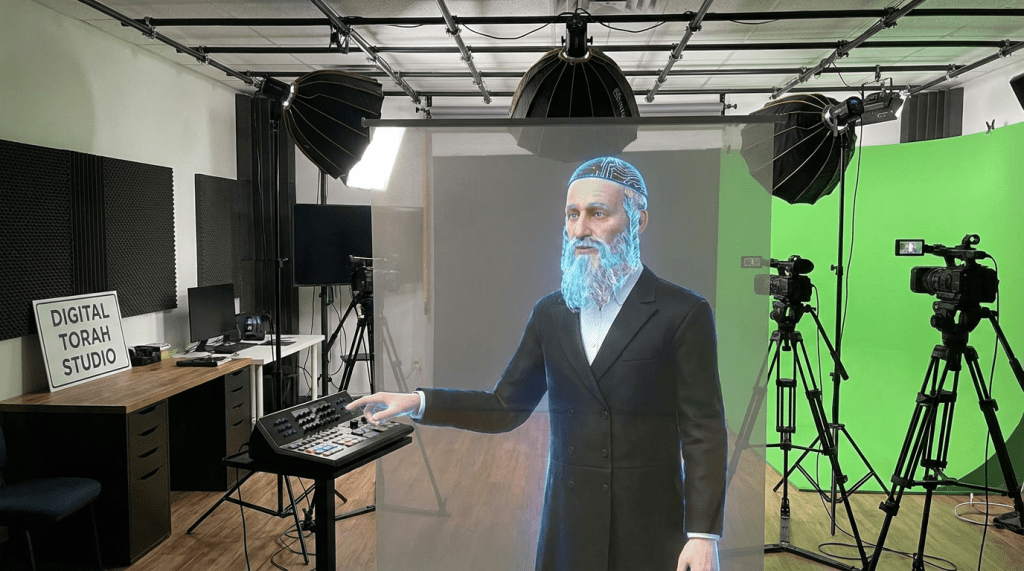
Rabbi Goldman is an emerging social media channel that has gained rapid popularity for using AI-powered avatars to deliver consistent and engaging video content. Its distinctive method of combining structured storytelling with AI-generated presenters has sparked curiosity among creators, leading to increased interest in how to create similar avatars.
In 2026, this style reflects a broader shift toward scalable, personality-driven content creation. Instead of recording videos repeatedly, creators can maintain a consistent on-screen presence using AI avatars. This allows for high-volume content production while preserving tone, delivery, and visual identity across all videos.
This tutorial will guide you through the complete process of building a similar system using Zoice—from creating a custom avatar to producing a fully expressive talking video. By the end, you’ll understand how to develop AI avatars that communicate clearly, consistently, and with a recognizable style.
Why Generate Rabbi Goldman–Like AI Avatars?
Creating avatars in this style is primarily about replicating a proven method of content delivery that emphasizes clarity, consistency, and scalability. Channels like Rabbi Goldman stand out because they combine a recognizable visual presence with structured, engaging messaging delivered through AI presenters.
One major advantage is scalability without sacrificing personality. Traditional video production makes it difficult to maintain consistent tone and delivery across multiple recordings. AI avatars solve this by allowing you to replicate the same voice, pacing, and presence across numerous videos effortlessly.
Another benefit is enhanced content control. With AI avatars, you can fine-tune scripts, emotional expressions, and delivery styles to match what resonates with your audience. This enables faster experimentation, easier iteration, and the ability to build a strong, consistent channel identity similar to other fast-growing AI-driven creators.
Steps to Generate Rabbi Goldman–Like AI Avatars Using Zoice
Before starting, it’s important to understand that Zoice follows a structured workflow. Avatar creation, voice setup, and video generation are handled separately. Following each step carefully ensures your final output looks realistic, consistent, and expressive.
Step 1 – Log into Zoice Dashboard

Start by logging into your Zoice account. Once inside the dashboard, you’ll have access to all the tools required for avatar creation, voice configuration, and video generation.
Step 2 – Select Avatar Characters

From the left-hand menu, navigate to the Avatar Characters section. This is where you can view existing avatars or create new ones based on your needs.
Step 3 – Click “Create New”

Click on the Create New button to begin building your custom AI avatar. This action initiates the avatar creation workflow.
Step 4 – Choose Upload Image Option

You’ll be given two choices: upload an image or generate one using an AI prompt. For a more realistic and personalized result, select Upload Image and use a high-quality photo.
Step 5 – Name Your Avatar

Assign a name to your avatar. This helps you stay organized, especially if you plan to create multiple avatars for different types of content.
Step 6 – Generate Avatar

Click on Generate Avatar and allow Zoice to process your image. The system will create a digital avatar with mapped facial features and animation capabilities.
Step 7 – Navigate to Voice Profiles

After your avatar is ready, go to the Voice Profiles section from the sidebar. This is where you manage voice settings for your avatar.
Click Create New Voice to begin setting up a custom voice profile.
Step 8 – Upload and Generate Voice

Upload a voice sample and assign it a name. Once uploaded, click Create Voice to generate a voice profile that can be used in your videos.
Step 9 – Go to New Avatar Videos

Navigate to the New Avatar Videos section. This is where you combine your avatar and voice to create the final video output.
Step 10 – Add Script and Reactions

Enter your script into the editor. Zoice allows you to include emotional cues and reactions, which help make the avatar’s delivery more natural and engaging.
Step 11 – Select Voice Profile

Choose the voice profile you created earlier. This ensures your avatar speaks with the intended tone and style.
Step 12 – Configure Video Settings

Adjust video settings such as resolution, size, pixel quality, and action prompts. These options allow you to optimize your video for different platforms.
Step 13 – Generate Final Video
Click Generate to produce your final AI avatar video. Zoice will process all elements and create a fully synchronized video with voice, motion, and expressions.
Things to Consider While Making Rabbi Goldman–Like AI Avatars
Creating effective AI avatars requires more than simply generating a face and attaching a voice. To achieve impactful results that truly engage viewers, you need to focus on consistency, structured delivery, and realistic presentation. The success of this style lies in how well all elements—visuals, voice, and scripting—work together to create a believable and recognizable digital persona.
Maintain a Consistent Avatar Identity
Consistency is the foundation of building recognition. Using the same avatar across all your videos helps establish familiarity and trust with your audience over time. When viewers repeatedly see the same face, they begin to associate it with a specific type of content and messaging style.
Frequent changes in appearance—such as switching avatars, altering facial features, or modifying styling—can disrupt this connection and weaken your overall brand identity. Instead, treat your avatar like a fixed digital personality that represents your content across all platforms.
Focus on Structured Scripting
A well-structured script is essential for making your avatar feel natural and engaging. Your content should follow a clear flow—starting with a strong hook, delivering the main message concisely, and ending with a clear takeaway or call to action.
Avoid overly complex or lengthy sentences, as they can make the delivery feel unnatural and harder to follow. Short, well-paced lines improve clarity and help the AI maintain accurate lip-sync. Structured scripting also ensures that your content remains consistent in tone and format, which is key for audience retention.
Keep Voice and Tone Consistent
Your avatar’s voice plays a major role in shaping its personality. Choosing the right voice profile—and sticking to it—is crucial for maintaining a cohesive experience across all your videos.
If you frequently switch between different tones, accents, or speaking styles, your content may feel inconsistent and less professional. A stable voice helps reinforce your avatar’s identity and makes your content more predictable and comfortable for viewers to consume. Over time, this consistency strengthens audience connection and trust.
Use Subtle Expressions and Reactions
Expressions and emotional cues are what bring your avatar to life, but they need to be used with precision. Overly exaggerated reactions can make the avatar feel artificial or distracting, while too little expression can make it seem lifeless.
The goal is to strike a balance—use subtle facial movements, slight gestures, and natural pauses to enhance realism. Small details like slight head movements or controlled emotional shifts can significantly improve how human-like your avatar appears without overwhelming the viewer.
Optimize for Scalable Content
One of the biggest advantages of AI avatars is the ability to scale content production efficiently. To fully benefit from this, you should design a workflow that can be reused with minimal adjustments.
This means standardizing your avatar, voice profile, script format, and video settings so that you can quickly generate new content without starting from scratch each time. A scalable system allows you to maintain quality while increasing output, making it easier to stay consistent with posting and grow your channel faster.
Ensure Smooth Motion and Facial Stability
Realism depends heavily on how well your avatar moves and reacts. Pay close attention to animation quality, especially facial stability and lip synchronization. Any glitches, unnatural movements, or delays in expression can break immersion and reduce viewer trust.
Make sure that facial features remain stable throughout the video and that speech aligns perfectly with mouth movements. Smooth transitions, steady eye focus, and controlled motion all contribute to a polished and professional final output.
Conclusion
Generating Rabbi Goldman–style AI avatars using Zoice is a streamlined process that enables you to create consistent and expressive digital presenters. By combining a custom avatar, personalized voice, and well-structured scripts, you can produce videos that feel natural and engaging.
This approach eliminates the need for repeated recording while giving you full control over tone, delivery, and content. It also allows for scalable production, making it possible to create multiple videos without compromising quality.
For creators, educators, and businesses looking to replicate a consistent communication style while scaling content, Zoice offers a flexible and efficient solution.
FAQs
What type of image works best for AI avatars?
A high-resolution, front-facing image with even lighting and minimal shadows works best for generating AI avatars. The face should be clearly visible, without obstructions like sunglasses or heavy filters. Neutral expressions tend to produce better animation results, as they allow the system to map facial movements more accurately and generate smoother, more natural expressions during video playback.
Can I replicate a specific speaking style using Zoice?
Yes, you can closely replicate a specific speaking style by combining a well-trained voice profile with carefully structured scripts and emotional cues. By controlling pacing, sentence length, and tone markers, you can shape how the avatar delivers content. Over time, refining these elements helps you achieve a consistent and recognizable communication style.
Is voice cloning required for realistic delivery?
Voice cloning is not mandatory, but it significantly enhances realism and consistency. Using a cloned or custom-trained voice allows you to maintain the same tone, pitch, and delivery style across all videos. Without it, prebuilt voices can still work, but they may lack the uniqueness and personality needed for building a strong content identity.
Can I reuse the same avatar for multiple videos?
Yes, once your avatar is created, it can be reused across unlimited videos with different scripts, emotions, and settings. This is one of the biggest advantages of AI avatars, as it allows you to maintain a consistent on-screen identity while producing content at scale without needing to recreate or redesign the avatar each time.
Is this suitable for professional content in 2026?
Absolutely. AI avatars are widely adopted in industries such as education, marketing, customer support, and business communication. Their ability to deliver consistent messaging at scale makes them ideal for professional use. With proper scripting and setup, they can match the quality and reliability expected in modern digital content production.
How long does it take to create an AI avatar video?
The time required depends on your setup, but once your avatar and voice profile are ready, generating a video can take just a few minutes. Initial setup may take longer, especially when refining voice and visuals, but after that, the process becomes fast and efficient for regular content creation.
Do I need technical skills to use Zoice?
No, Zoice is designed to be user-friendly and does not require advanced technical knowledge. Its interface guides you through each step, from avatar creation to video generation. Basic familiarity with uploading files and writing scripts is enough to get started and produce high-quality AI avatar videos.
What kind of content works best with AI avatars?
AI avatars perform best with structured, talking-head style content such as educational videos, tips, storytelling, marketing messages, and informational content. Formats that rely on clear communication and consistent delivery tend to perform better, especially when paired with short-form video strategies used on platforms like TikTok, Instagram, and YouTube Shorts.
 AI Avatar Business
Leave a comment